



Does Heat Protectant Really Work to Protect Hair?
June 22, 2026
CONTENT
- The Science of Thermal Damage: What Happens to Unprotected Hair?
- How Does Heat Protectant Really Work?
- UniqOne™ Hair Treatment: The Ultimate Heat Protectant and Prep Step
- A Stylist’s Guide to Healthy Heat Styling
- So, Is a Heat Protectant Really Worth the Investment?
- Frequently Asked Questions About Heat Protectants
Heat protectants are key to shielding hair from thermal damage. Applying a thermal barrier is an essential insurance policy for your hair health. You might be asking yourself why your hair feels dry, brittle, or unable to hold a style. The culprit is almost always unprotected heat styling. While flat irons, curling wands, and blow dryers are helpful tools for achieving your desired look, they can severely compromise the integrity of your hair fiber if used incorrectly.
In this guide, we’ll break down the science of heat damage and reveal why professional stylists trust multi-benefit formulas to keep strands strong, shiny, and resilient.
The Science of Thermal Damage: What Happens to Unprotected Hair?
To understand why a heat protectant is necessary, we first need to understand what happens when bare hair meets high temperatures. Heat styling relies on breaking the temporary hydrogen bonds in your hair to reshape it. That being said, pushing temperatures too high without a buffer leads to structural destruction.
Here is what happens when you skip the protection:
- Keratin breakdown: Hair is primarily made of keratin proteins. Excessive heat weakens and degrades this protein structure, leading to a loss of elasticity and strength.
- The flash drying effect: When high heat hits damp or unprotected dry hair, it causes the internal water molecules to rapidly evaporate. This ‘flash drying’ effect causes the hair cuticle to crack and split under the pressure.
- Visible signs of damage: Thermal damage can present itself as extreme frizz, dullness, frayed split ends, and sudden breakage mid-shaft.
Once the hair cuticle is damaged and the proteins are degraded, you cannot easily glue the hair back together. Prevention is the only true cure.
How Does Heat Protectant Really Work?
A high-quality heat protectant functions much like an oven mitt for your hands. It does not stop the hair from getting warm, but it significantly reduces the impact of the heat transfer.
When you apply a thermal product, you are actively doing three things to preserve your hair health:
- Creating a thermal barrier: Advanced formulas utilize specialized polymers and silicones to form a microscopic, protective shield over the hair cuticle. This buffer takes the brunt of the heat, so that your delicate hair fiber does not have to.
- Even heat distribution: A heat protectant slows down thermal conduction. This prevents localized hotspots from flat irons and curling wands, making sure that the heat is distributed evenly across the hair section.
- Moisture retention: By sealing the cuticle, protective sprays and creams lock in your hair’s natural hydration. This significantly minimizes the friction and structural stress caused by the mechanical pulling of styling tools.
UniqOne™ Hair Treatment: The Ultimate Heat Protectant and Prep Step
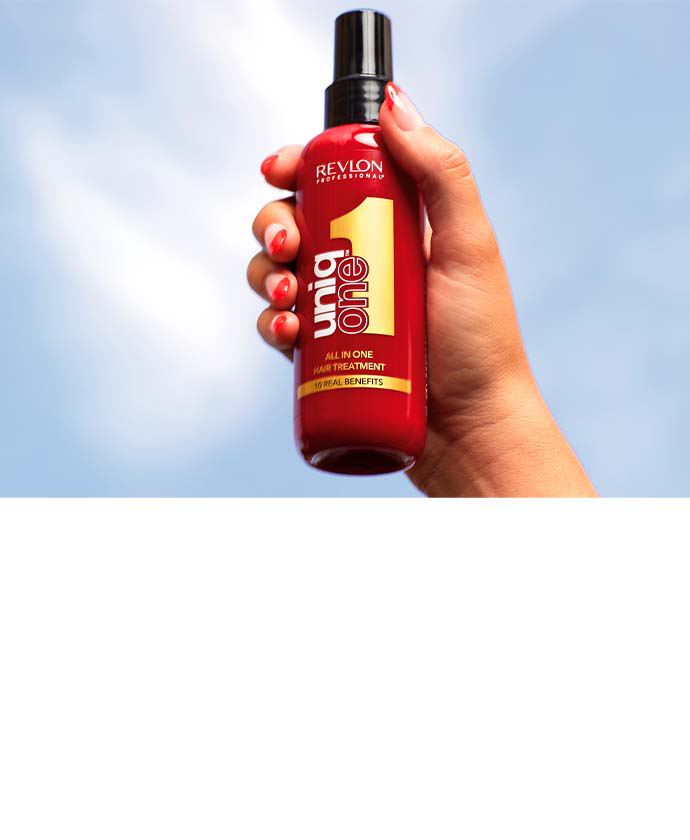
The UniqOne™ Hair Treatment is a staple in professional salons because it acts as both a high-performance heat protectant and a comprehensive daily leave-in treatment. Instead of layering five different products that can weigh the hair down, UniqOne™ simplifies the routine while providing salon-grade thermal defense.
It is globally renowned for delivering the following 10 real benefits:
- Repairs dry and damaged hair
- Strengthens and reduces breakage
- Conditions and detangles
- Controls frizz
- Instantly moisturizes
- Provides heat protection
- Boosts shine and protects color
- Softens and increases manageability
- Helps prevent split ends
- Refreshes the hairstyle
Pro Tip: Applying a multi-benefit product like the UniqOne™ Hair Treatment to damp hair creates the perfect, manageable canvas. It makes it so that your brush glides effortlessly during a blowout, reducing mechanical breakage while the thermal barrier sets into place.
A Stylist’s Guide to Healthy Heat Styling
Even with the best thermal protection in your arsenal, technique matters. Here are the top professional rules for keeping your hair healthy while using hot tools.
Prep Damp Hair Thoroughly
The foundation of a great style happens before you even pick up a dryer. It is important to apply your thermal protectant to clean, damp hair. Water acts as a vehicle, helping the product spread evenly and absorb completely. Comb the product through from the mid-lengths to the ends to guarantee every single strand is coated and protected before the drying process begins.
Customize Your Tool Temperature
A major misconception is that hot tools need to be set to their maximum temperature. Not everyone needs 230°C to achieve a sleek style. If you have fine or color-treated hair, keep your tools between 150°C and 175°C. If you have thick or coarse hair, you can handle slightly higher, controlled temperatures around 190°C to 200°C. Always start lower and only increase the heat if your hair resists the style.
Work in Clean, Manageable Sections
One of the biggest mistakes consumers make is grabbing large, random chunks of hair with a flat iron and passing over them five or six times. This cumulative heat exposure can be very damaging. Instead, take small, clean sections. A smaller section ensures that the heat penetrates evenly, meaning that you only need one or two slow, smooth passes to get the job done.
So, Is a Heat Protectant Really Worth the Investment?
The short answer is yes. The science and salon results speak for themselves: it is an absolute necessity.
Whether you are executing a bouncy blowout or a sleek flat-ironed look, a thermal barrier is a non-negotiable step for anyone using hot tools. Ignoring this step leads directly to moisture loss, protein degradation, and irreversible breakage.
By incorporating a professional-grade product like UniqOne™ Hair Treatment into your daily routine, you are not just shielding your hair from the burn. You are actively improving its texture, boosting its shine, and ensuring that your color stays vibrant longer. So invest in a heat protectant now, your hair will thank you for it.
Ready to elevate your salon services or at-home haircare? If you’re a salon professional, visit Revlon Pro AlwaysOn (exclusive to clients; sign in required) for exclusive education, resources, and support. Shop the complete UniqOne™ collection directly through Revlon Pro Shop and bring softness, shine, and effortless manageability to your routine.
Frequently Asked Questions About Heat Protectants
Do I need a heat protectant if I only use a blow dryer?
Yes. While blow dryers use indirect heat compared to the direct contact of a flat iron, the concentrated, high-velocity hot air still causes severe cuticle dehydration. Using a protectant guards against this moisture loss and protects the hair from the friction of your brush.
Can I apply heat protectant to dry hair before curling or flat ironing?
While the UniqOne™ Hair Treatment can be applied to both dry hair as a refresher and to wet hair, generally speaking, to guarantee the highest level of protection, it works best when applied to damp hair. Applying it while the hair is damp locks in moisture and ensures the protective barrier is fully dried and set before intense, direct heat is applied.
Does heat protectant fix hair that is already heat-damaged?
A protectant cannot permanently repair broken protein bonds. However, advanced formulas like UniqOne™ will deeply condition, smooth the roughened cuticle, and temporarily seal split ends. This effectively masks existing damage, restores cosmetic shine, and critically prevents any further thermal destruction from occurring.

Related products
Related articles
Keep on reading if you’ve enjoyed this one!


December 2025

Hair Care Gift Ideas They’ll Actually Love

December 2025

How to Get the Best Results with Re/Start™ Curls


October 2025